Readers who are keen to broaden their understanding of the Crimean War and of the British army of the period will gain a critical insight through the variety of books we publish on the subject.
Memoirs and letters written by soldiers who took part provide graphic first-hand accounts of the campaign, and biographies and reassessments of key battles are essential reading for students of the Crimea and of nineteenth-century warfare in general.
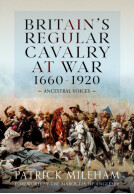
Patrick Mileham’s Britain's Regular Cavalry at War 1660–1920: Ancestral Voices offers a compelling and informative exploration of the development of Britain’s cavalry regiments across more than two and a half centuries. The book clearly explains how individual cavalry regiments gradually came together to form a unified and effective force within the British Army. Mileham provides valuable insight into the distinctive identities of each regiment, highlighting their traditions, organisation, and the unique roles they played in warfare. One of the strengths of the book is its ability to combine historical narrative with an appreciation of the cavalry’s character and heritage. The author carefully examines how the regiments differed from one another while also demonstrating how they worked collectively on the battlefield. As the only branch of the British Army to rely on horses, the cavalry possessed a particular operational flexibility and prestige, which Mileham captures well throughout.. Read more
Colonel (retd) Guy Deacon CBE (late QDG) - Formerly, Colonel Royal Armoured Corps
Patrick Mileham’s Britain's Regular Cavalry at War 1660–1920: Ancestral Voices offers a compelling and informative exploration of the development of Britain’s cavalry regiments across more than two and a half centuries. The book clearly explains how individual cavalry regiments gradually came together to form a unified and effective force within the British Army. Mileham provides valuable insight into the distinctive identities of each regiment, highlighting their traditions, organisation, and the unique roles they played in warfare. One of the strengths of the book is its ability to combine historical narrative with an appreciation of the cavalry’s character and heritage. The author carefully examines how the regiments differed from one another while also demonstrating how they worked collectively on the battlefield. As the only branch of the British Army to rely on horses, the cavalry possessed a particular operational flexibility and prestige, which Mileham captures well throughout.. Read more
Colonel (retd) Guy Deacon CBE (late QDG) - Formerly, Colonel Royal Armoured Corps
[b]Rating[/b]: 5 out of 5 stars
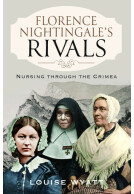
I really enjoyed getting to learn about other nurses around the time of Florence Nightingale. The research was everything that I was looking for and enjoyed how everything that I wanted about this. Louise Wyatt has a strong writing style and was glad I got to read this.
NetGalley, Kathryn McLeer
[b]Rating[/b]: 5 out of 5 stars
I really enjoyed getting to learn about other nurses around the time of Florence Nightingale. The research was everything that I was looking for and enjoyed how everything that I wanted about this. Louise Wyatt has a strong writing style and was glad I got to read this.
NetGalley, Kathryn McLeer
Review as featured in
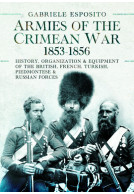
Highlight: 'If you are painting up Crimean War armies, this is a marvelous collection of imagery and uniform descriptions of all the major players. If you are going to put on a wargame, you'll need a different book for the units and the number of troops per unit for any particular battle.'
Read the full review [link=https://www.hmgs.org/blogpost/1779451/499573/BOOK-REVIEW-Armies-of-the-Crimean-War-1853-1856]here.[/link]
Historical Miniatures Gaming Society, April 2024
Review as featured in
Highlight: 'If you are painting up Crimean War armies, this is a marvelous collection of imagery and uniform descriptions of all the major players. If you are going to put on a wargame, you'll need a different book for the units and the number of troops per unit for any particular battle.'
Read the full review [link=https://www.hmgs.org/blogpost/1779451/499573/BOOK-REVIEW-Armies-of-the-Crimean-War-1853-1856]here.[/link]
Historical Miniatures Gaming Society, April 2024
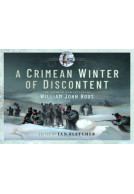
It was well presented with excellent sensible illustrations and photos throughout. I do not hesitate to recommend it to anyone...
Read the full review [link=https://www.arrse.co.uk/community/threads/a-crimean-winter-of-discontent-the-crimean-war-letters-of-william-john-rous-1854-55edited-by-ian-fletcher.314747/]here[/link]
ARRSE (Army Rumour Service)
It was well presented with excellent sensible illustrations and photos throughout. I do not hesitate to recommend it to anyone...
Read the full review [link=https://www.arrse.co.uk/community/threads/a-crimean-winter-of-discontent-the-crimean-war-letters-of-william-john-rous-1854-55edited-by-ian-fletcher.314747/]here[/link]
ARRSE (Army Rumour Service)
Transcribed, edited and annotated by Michael Springman, "Sharpshooter in the Crimea: The Letters of the Captain Gerald Goodlake VC 1854-56" provides a unique, informative, and fascinating perspective on the British forces engaged in the Crimean conflict. While very highly recommended as a core addition to 19th Century British Military History collections in general, and the Crimean War in particular.
Read the full review [link=http://www.midwestbookreview.com/lbw/feb_23.htm#military]here[/link]
Midwest Book Review
Transcribed, edited and annotated by Michael Springman, "Sharpshooter in the Crimea: The Letters of the Captain Gerald Goodlake VC 1854-56" provides a unique, informative, and fascinating perspective on the British forces engaged in the Crimean conflict. While very highly recommended as a core addition to 19th Century British Military History collections in general, and the Crimean War in particular.
Read the full review [link=http://www.midwestbookreview.com/lbw/feb_23.htm#military]here[/link]
Midwest Book Review